Battic Door Attic Stair Cover


$99.00
2 SIZES: 22×54, and 25×54.
A MINIMUM OF R-30 to R-49 is now required for new construction and renovation in accordance with 2015, 2018 IRC Section N1102.2.3 and 2015, 2018 IECC Section R402.2.4
R-50 Insulation is NOT included. See the “Insulation Guide” tab for details on adding your own insulation.
For questions please contact us at info@batticdoor.com or 800-222-5932
- Description
- Code Requirements
- Sizing Guide
- Insulation Guide
- Installation Guide
- Industry Experts
- Reviews (9)
Description
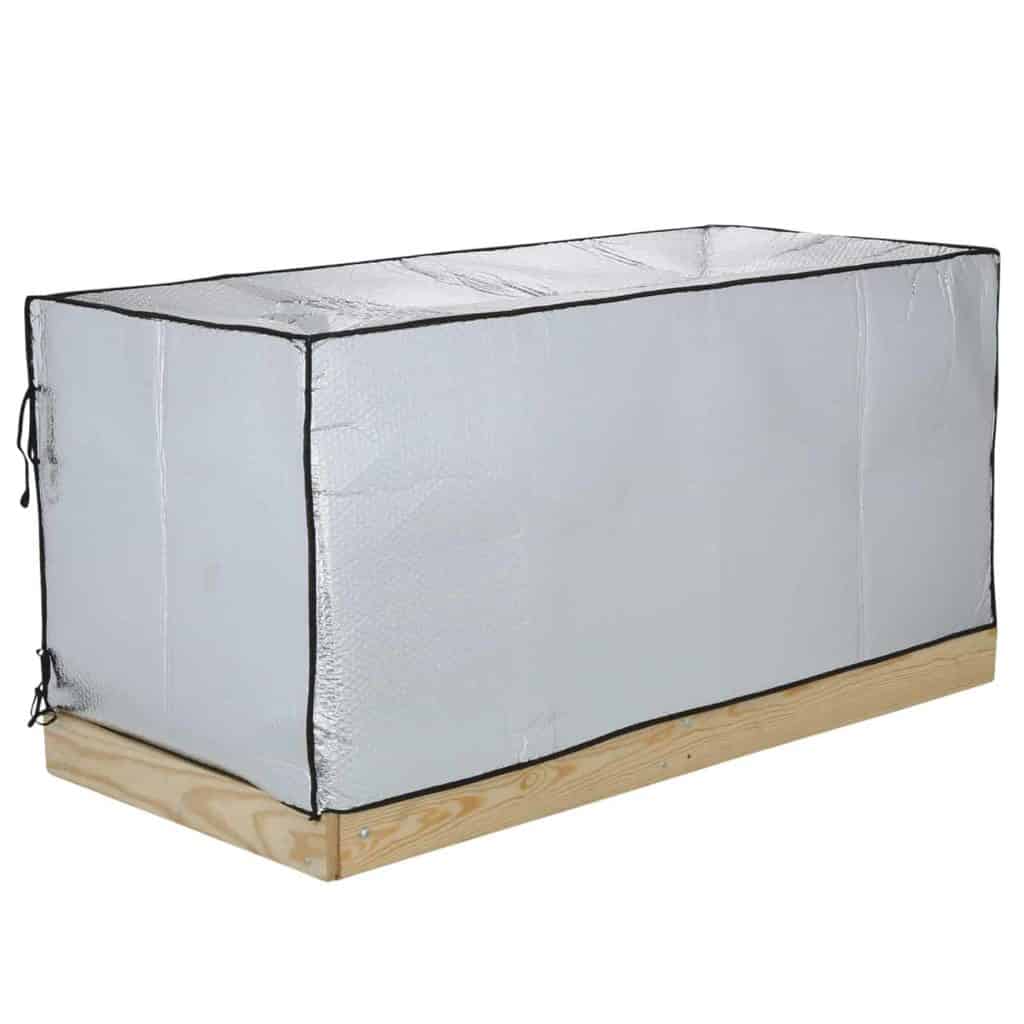
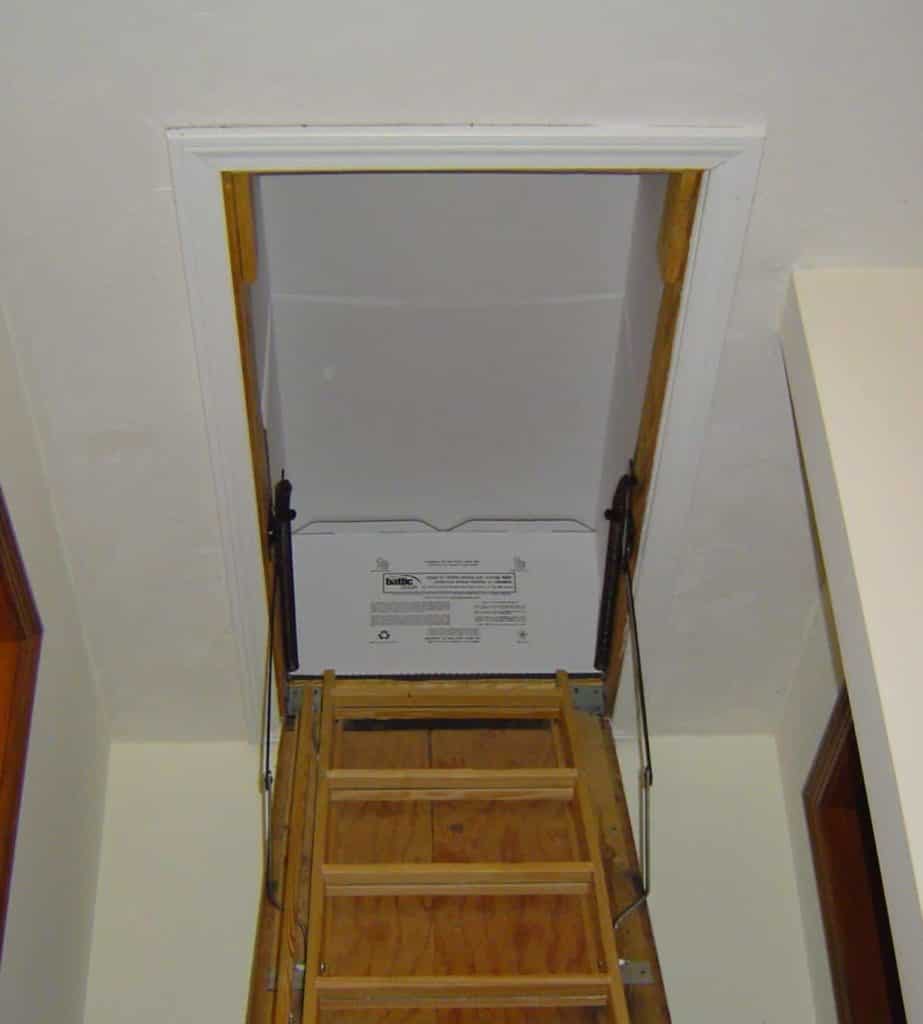
Battic Door Attic Stair Cover is an energy-efficient pull down ladder insulating cover. New codes require the attic access to be insulated to the same level as the attic.
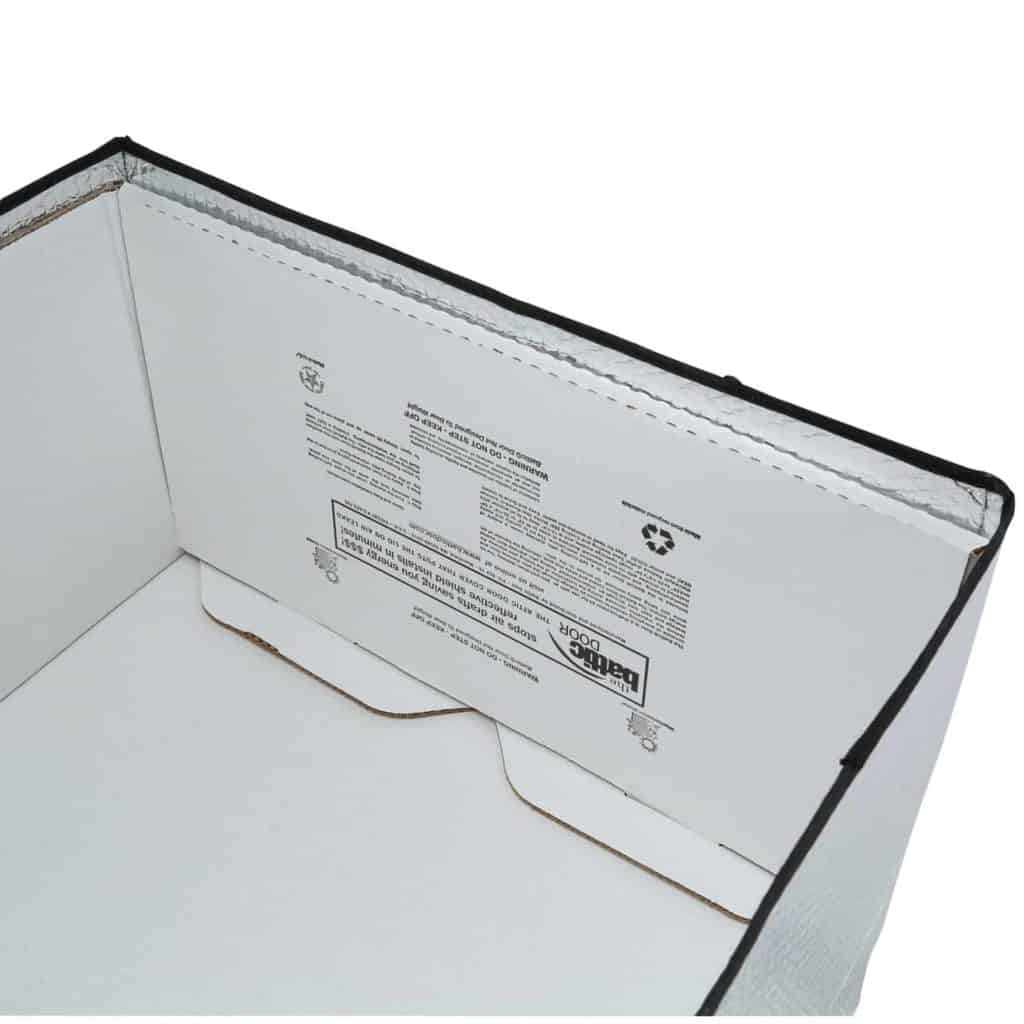
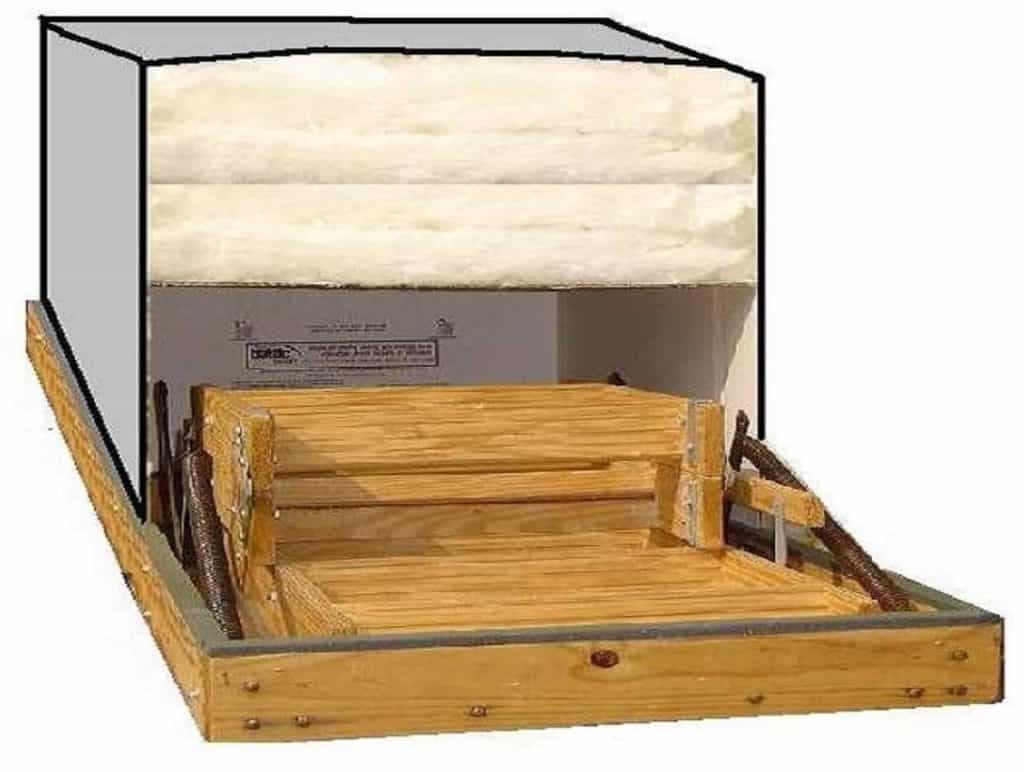
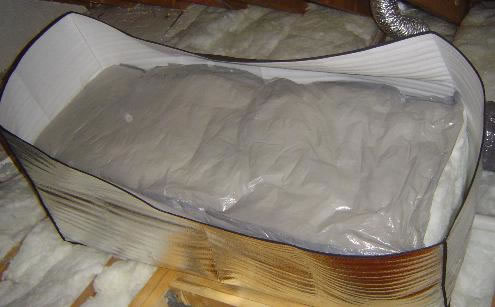
The kit includes everything you need to cover and seal your pull down ladder. The kit includes the rigid box (stair cover), foam gasket, and a reflective shield.
Battic Door Attic Stair Cover installs easily without tools. Insert the insulation (not included) into the reflective shield, and place the stair cover rigid box into the reflective shield covering the insulation. The shield holds the insulation to the box. Additional insulation (not included) may be added to the sides. The stair cover fits between trusses on the pull down ladder frame. Available in 2 sizes to fit most any size or brand of pull down ladder: 22 in. x 54 in. and 25 in. x 54 in.
Attic Stair Cover Includes:
Includes:
-Attic stair cover
-Foam gasket
-Reflective shield
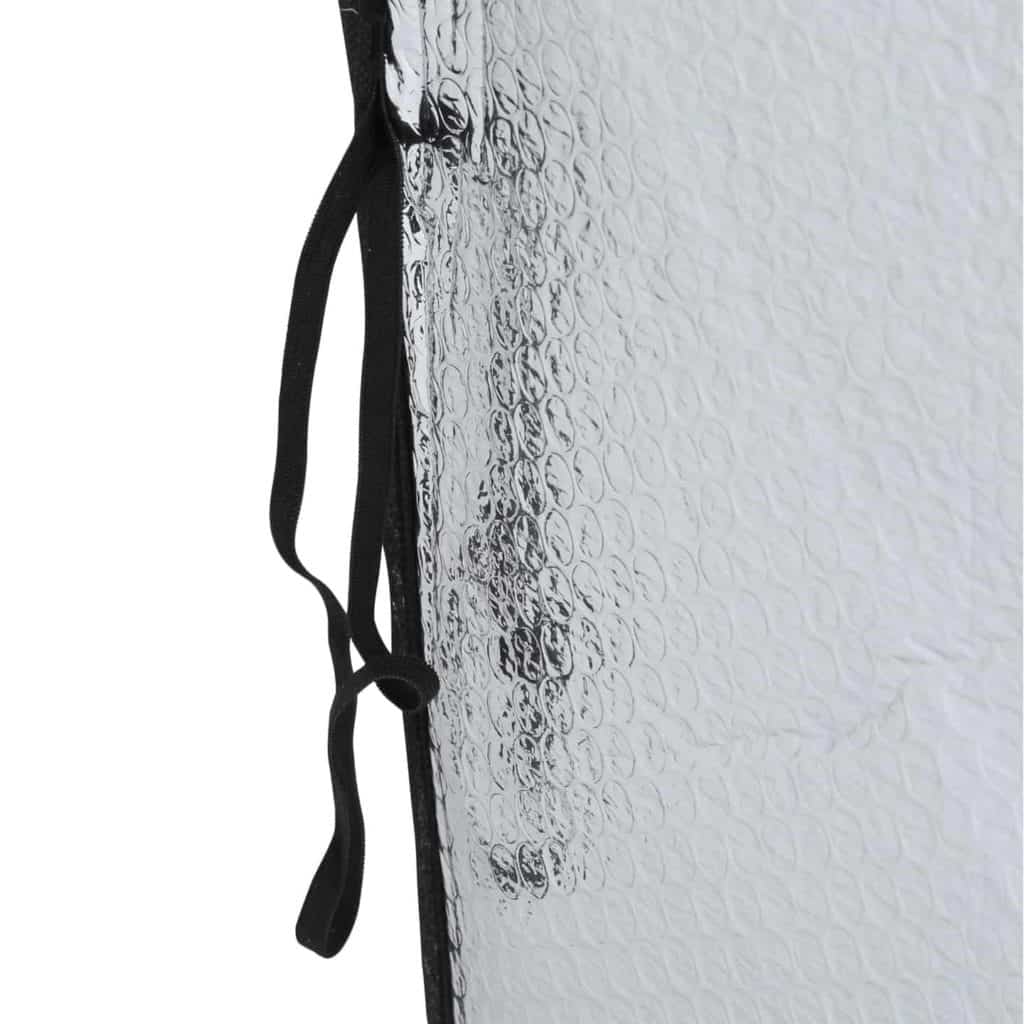
Reflective Aluminum Shield slips over stair cover and seals insulation. It also provides a reflective surface that saves energy and reflects away heat. The Reflective Aluminum Shield blocks up to 97% of radiant heat.
*Insulation NOT included. See the “Insulation Guide” tab for help adding your own insulation*
Code Requirements
2015, 2018 IRC Section N1102.2.3 and 2015, 2018 IECC Section R402.2.4 reads “Access doors from conditioned spaces to unconditioned spaces (e.g. attics and crawl spaces) shall be weather-stripped and insulated to a level equivalent to the insulation on the surrounding surfaces.”
These Code requirements mean the attic access pull down ladder or access hatch must now be insulated to the same level as the rest of the attic (minimum R-30).
It is important to note that R-5, R-10 attic ladders Do Not Meet Code – they must be insulated to minimum of R-30.
Sizing Guide
WHAT SIZE BATTIC DOOR ATTIC STAIR COVER DO I NEED?
The Battic Door Attic Stair Cover is now available in the 2 most popular folding attic stairway sizes. Both Battic Door Attic Stair Cover models are 13-1/2″ deep to fit both wood and aluminum style folding attic stairways.
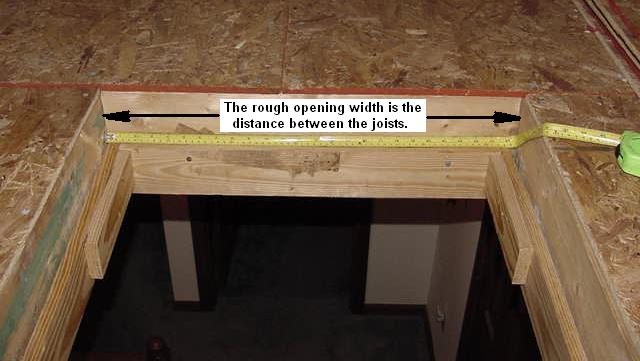
Model 22×54 fits folding attic stairways designed for 22″ x 54″ to 22-1/2″ x 54″ rough openings.
Model 25×54 fits folding attic stairways designed for 25″ x 54″ to 25-1/2″ x 54″ rough openings.
If you know your attic stairway manufacturer and model number, a quick reference can be found in the table below.
Otherwise, it is necessary for you to make a quick measurement of your attic stairway door.
OUR ATTIC STAIR COVER KITS ARE AVAILABLE IN 2 SIZES:
All kits include durable stair cover and weatherstripping. All kits easily install in minutes with no tools!
How To Determine Correct Size To Fit Your Folding Stairs:
Pull down cord – measure length and width of the hinged door (between trim).
24″ wide x 52″ long = Model 25×54
21″ wide x 52″ long = Model 22×54
Dimensions are approximate so PLEASE email or call if any questions!

Remember – the Battic Door Attic Stair Cover will rest on the 3/4″ wide perimeter attic stairway door frame (not the structural framing of the house or the floor of the attic).
If you are still not sure what size Battic Door Attic Stair Cover will fit your specific application, the actual dimensions of each Battic Door model are as follows:
Battic Door Attic Stair Cover Model 22×54:
Fits folding attic stairs designed for 22″ x 54″ to 22-1/2″ x 54″ rough openings (actual cover size is 21″ wide x 52-1/2″ long x 13-1/2″ deep inside dimensions, 21-5/16″ wide x 53-1/4″ long x 13-5/8″ tall outside dimensions)
Battic Door Attic Stair Cover Model 25×54:
Fits folding attic stairs designed for 25″ x 54″ to 25-1/2″ x 54″ rough openings (actual cover size is 24″ wide x 52-1/2″ long x 13-1/2″ deep inside dimensions, 24-5/16″ wide x 53-1/4″ long x 13-5/8″ tall outside dimensions)
IF YOU HAVE ANY QUESTIONS ABOUT WHICH MODEL YOU NEED, PLEASE EMAIL US YOUR DIMENSIONS FOR CONFIRMATION! WE WILL RESPOND PROMPTLY.
MANUFACTURER’S CURRENT MODEL NUMBER TABLE
(Please measure your rough opening even if you do not see your model in the table below – numerous products no longer manufactured are not listed below)
| Manfacturer | Folding Stairway Model | Rough Opening | Battic© Door Model |
|
American Stairways, Inc.
|
Husky 444, 544, 655
|
22″ x 54″
|
22×54
|
|
American Stairways, Inc.
|
Husky 444, 544, 655
|
25-1/2″ x 54″
|
25×54
|
|
Bessler Stairway Co.
|
Space-Saver
|
22″ x 54″
|
22×54
|
|
Bessler Stairway Co.
|
Space-Saver
|
25-1/2″ x 54″
|
25×54
|
|
Century Folding Attic Stairways
|
Premium Wood AET-89, AET-100, Windsor Wood BET-89, BET-100, Supreme Aluminum
SAT-89, SAT-100
|
22-1/2″ x 54″
|
22×54
|
|
Century Folding Attic Stairways
|
Premium Wood AE-89, AE-100, Windsor Wood BE-89, BE-100,
Supreme Aluminum SA-89, SA-100
|
25-1/2″ x 54″
|
25×54
|
|
Louisville Ladder
|
Premium Series, S224P, L224P, Champion Series, CS224I, CL224I, CS224P, CL224P,
Summit Series, AS226P, AL226P
|
22-1/2″ x 54″
|
22×54
|
|
Louisville Ladder
|
Premium Series, S254P, L254P, Champion Series, CS254I, CL254I, CS254P, CL254P,
Summit Series, AS256P, AL256P
|
25-1/2″ x 54″
|
25×54
|
|
Marwin Co.
|
Superior S-80, S-81, Atlas A-80, A-81,
Titan T-80, T-81
|
22-1/2″ x 54″ |
22×54
|
|
Marwin Co.
|
Superior S-100, S-101, Atlas A-100, A-101,
Titan T-100, T-101
|
25-1/2″ x 54″ |
25×54
|
|
Memphis Folding Stairs
|
Excel, Imperial, Premier, Ultimate
|
22″ x 54″
|
22×54
|
|
Memphis Folding Stairs
|
Excel, Imperial, Premier, Ultimate
|
25-1/2″ x 54″
|
25×54
|
|
Michigan Ladder Co.
|
Type I, 3422-24, 3422-25
|
22-1/2″ x 54-3/4″
|
22×54
|
|
Michigan Ladder Co.
|
Type I, 3422-54, 3422-55
|
25-1/2″ x 54-3/4″
|
25×54
|
|
Misc
|
22-1/2″ x 54″
|
22×54
|
|
|
Misc
|
25-1/2″ x 54″
|
25×54
|
|
|
Werner Ladder
|
A2208, A2210, W2208, W2210, WH2208, WH2210
|
22-1/2″ x 54″
|
22×54
|
|
Werner Ladder
|
A2508, A2510, W2508, W2510, WH2508, WH2510
|
25″ x 54″
|
25×54
|
Insulation Guide
To maximize the benefits of the Battic Door Attic Stair Cover and to fulfill code requirements, the insulating value can be increased by adding insulation to the top of the cover.
Insulation Types
Most insulation types will work including fiberglass, EPS, XPS. We recommend fiberglass insulation because it is readily available, easy to cut and has a high R-value per inch.
R-value
IRC codes require attic staircases to be insulated to a level equivalent to the insulation in the rest of the attic. The Battic Door Attic Stair Cover allows for up to 16″ of insulation to be added. We recommend using two layers of R-25 fiberglass insulation to achieve a R-50 value.
Insulation Size
Insulation is sold in standard sizes and needs to be cut in order to fit inside the Battic Door Attic Stair Cover. For the 22 x 54 size we recommend 21″ or 23″ wide fiberglass insulation and for the 25 x 54 we recommend 23″ or 24″ wide fiberglass insulation. The maximum insulation dimensions for both size are listed below.
22 x 54: 21″L x 52″W x 16″H
25 x 54: 24″L x 52″W x 16″H
Installation Guide
FITS BETWEEN TRUSSES! THE ORIGINAL AND THE BEST! THE CONTRACTOR’S CHOICE!
INSTALLATION INSTRUCTIONS OVERVIEW
- The Battic Door Attic Stair Cover is quickly and easily installed in minutes with no tools required!
- Included in the Battic Door Attic Stair Cover kit is the attic stairway cover, a supply of weatherstripping and a set of installation instructions.
- The attic stairway cover is self-locking – just fold it into shape! Self-locking tabs securely lock the ends of the cover into place – it just takes a minute to assemble
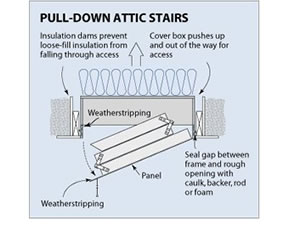
- Test fit the Battic Door on the folding attic stairway frame. Then apply the adhesive-backed weatherstripping to the top of the folding attic stairway frame.
- Then position the Battic Door Attic Stair Cover onto the weatherstripping as you leave the attic. The weatherstripping is as wide as the attic door frame – just let it fall into place and the stair cover embeds itself into the weatherstripping!
- That’s it – you’re done!
- The Battic Door Attic Stair Cover is designed to reduce drafts and save energy costs by reducing the transfer of air (drafts) between the conditioned house and the unconditioned attic. Insulation alone cannot do this – you need to prevent unwanted air leakage. And the Battic Door Attic Stair Cover does this quite well!!
- However – to maximize the benefits of the Battic Door Attic Stair Cover, if desired, the insulating value of the Battic Door Attic Stair Cover can be increased by adding insulation to the top of the cover.
Step By Step Install Instructions

All our stair cover kits come with a durable strong stair cover. Here is over 350 lbs on top of the stair cover – lightweight and very strong and durable.
Our BEST kit includes stair cover, reflective shield, and R-50 insulation.

Reflective Aluminum Shield slips over stair cover and seals insulation. It also provides a reflective surface that saves energy and reflects away heat. The Reflective Aluminum Shield blocks up to 97% of radiant heat.

Easy to install. Assemble the stair cover and then bring the stair cover, reflective shield, and R-50 insulation into the attic. Final assembly is performed in the attic as the finished kit will not fit through the stairs.

Drop the R-50 insulation into the reflective shield.

Then insert the stair cover into the reflective shield.

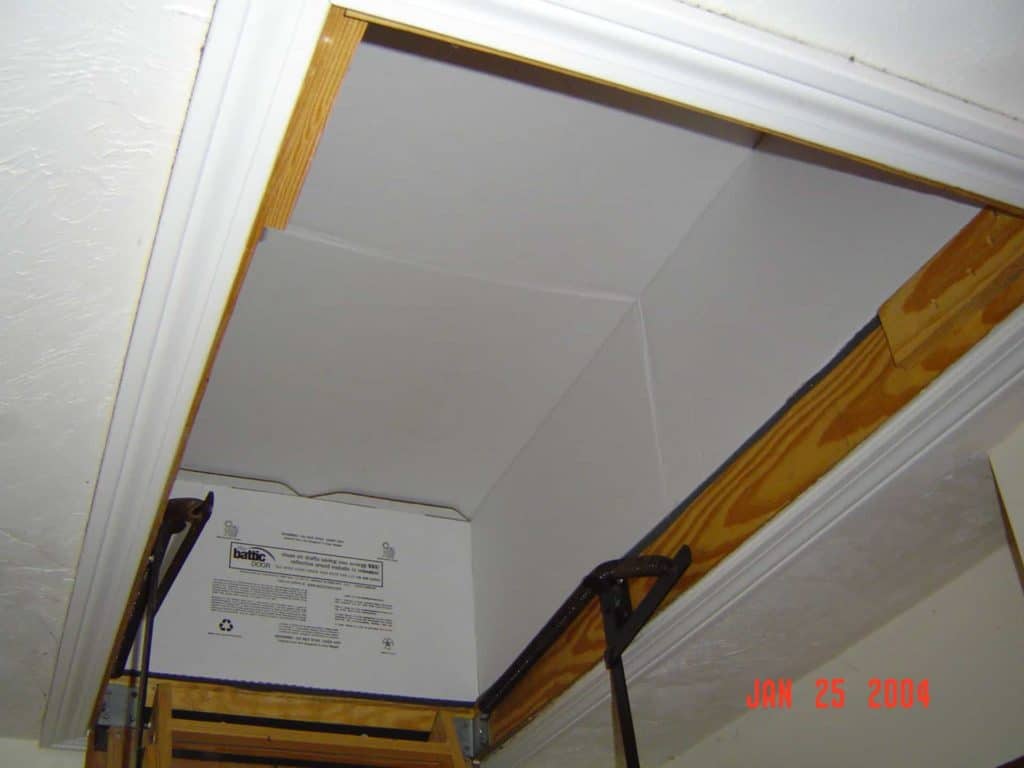
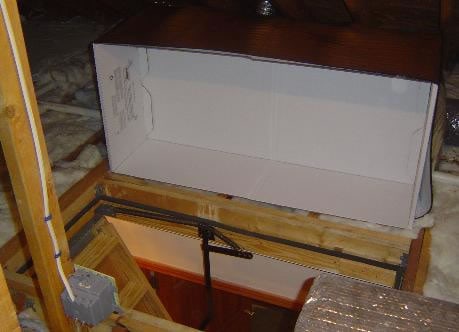
When you enter the attic just lift and move the stair cover out of the way. No hinges or zippers to get in your way or break!

The hinges clear the sides and top of the stair cover.

A stair cover must be used to seal attic stairs. Without a stair cover, there is nothing between you and the outdoors except the thin 1/8″ piece of plywood! Energy Codes require these openings to be sealed and insulated – otherwise, they are like an open skylight letting all your heat and AC just pour out of your house – wasting energy and costing you 24/7.

Close up of weatherstripping seal around the perimeter of our stair cover.

Industry Experts
Weatherization experts agree – it is vitally important to reduce air leakage into your attic. Air leakage takes heat and moisture with it – wasting energy and leading to potentially serious moisture problems.
“An airtight building assembly is a prerequisite for energy savings, pressure control, and ventilation effectiveness. Improved airtightness can be achieved through the use of the Battic(c) Door Attic Stair Cover, The Fireplace Draftstopper, and the Dryer Vent Seal.”
Energy Codes in force across North America require that attic access openings be caulked, gasketed, weatherstripped, or otherwise sealed to limit infiltration and exfiltration. This is because air leakage through cracks can result in higher energy use for home heating and cooling than necessary.
Below are quotes from numerous published articles, documents, fact sheets, and websites.
From U.S. Dep’t. of Energy (DOE) Office of Building Technology – Fact Sheet – ATTIC ACCESS
“DON’T LEAVE A HOLE IN THE CEILING – A home’s attic access, such as an attic hatch, pull-down stairs, or knee-wall door, often goes uninsulated, representing one of the biggest deficiencies in the thermal barrier between the attic and conditioned space. This gap in the attic insulation increases heat loss in winter and heat gain in summer, and makes indoor living areas uncomfortable. Such accesses are often not sealed properly. A ¼-inch gap around the perimeter of an attic access can potentially leak the same amount of air supplied by a typical bedroom heating duct (~100 CFM). Unsealed, the attic access in a home leaks energy dollars and causes the house to be less comfortable.”
“An attic access is a big hole.”
“ATTIC STAIRS – Pull-down stairs are another common type of attic access. The frame for the stairs fits in a rough opening and leaves a gap, much like that for a door or window, which must be sealed.”
“To insulate attic stairs access, a lightweight, moveable box can be constructed to fit over the stairs from the attic side. Insulating kits are also available through weatherization suppliers or from local hardware stores.”
From ZERODRAFT Professional Weatherization Materials and Canam Building Envelope Specialists Inc.: Homeowners – Thinking about a new roof?
“Have you got a wet attic? More and more homeowners are discovering mould, rotten wood, ice damming, buckled shingles and premature roof failures. Sometimes these problems lead to interior damage. These problems happen because of uncontrolled air leakage.
Here’s how air leakage causes such serious problems: Warm air in the house rises through leaks in the ceiling and walls and enters the attic. As the warm damp air gets into the cooler attic during the winter, it condenses on the wooden beams. The wood expands. When the attic gets warm in spring and summer, the wood dries and contracts. This constant process can loosen nails and cause shingles to buckle.
- Ice damming leads to serious damage.
Melting snow on the roof refreezes at roof edges and forms ice dams. These cause further melting snow to back up under shingles and enter the attic where it leads to moisture damage to ceilings and walls. Melting is caused by warm air rising from the interior of the house and also within poorly insulated and/or poorly sealed ducts located in the attic.
- Mold is very unhealthy. It’s associated with respiratory problems and allergies.
Mold is something you don’t find out about until you’re thinking about a new roof — after all, how many people ever go up in their attic? - Glass and mineral fiber insulation materials not only fail to solve these problems, they can actually make them worse.
Most contractors put in insulation plus ventilation with little thought to air leakage, moisture, condensation. - If you want to sell your house and the prospective buyer asks for a home inspection, you could be in for a major bill.
What are the real causes and solutions?
The traditional belief is that roof ventilation is a cure-all. It isn’t. It can make the problem worse. Here’s why: Passive ventilation doesn’t move much air through the attic. In winter, outside air has little ability to pick up moisture in an attic. CMHC research shows this. Active ventilation tends to draw more warm moist air into the attic. This air may not leave the attic at all; it often stays behind and condenses on the wood — leading to mildew, mold and rot.
How do you prevent these problems?
Ensure that warmth and warm air containing moisture in the living space cannot get into the non-conditioned space in the attic. Keep the attic sealed off from the living area below (using air leakage control measures to seal holes, cracks, gaps). Not by adding insulation on its own.”
9 reviews for Battic Door Attic Stair Cover
Related products
-


HV1000 Whole House Fan
$709.00 – $779.00 Select options This product has multiple variants. The options may be chosen on the product page -


HV3400 2 Speed Whole House Fan With Remote Control
$1,849.00 Select options This product has multiple variants. The options may be chosen on the product page -


Lift Lock 2500 Ducted Whole House Fan
$1,695.00 Add to cart -


AF-V3400G Airscape Ventura Whole House Fan
$1,695.00 Add to cart
Tamarack Technologies Inc –
I am a 65-yr old widow and was able to assemble and install the Best attic stairway insulation kit by myself in 15 min. Suffice it to say I am most pleased with this product.
Tamarack Technologies Inc –
My husband and I are 77 and 78 years of age. Recently, to make things easier for ourselves, we had attic stairs installed. It’s now much easier to get into our attic, but we lost the insulation factor and after these few hot, humid days the temperature in our second floor bedrooms was hard to take. We checked the internet and found on utube a set of instructions for building an enclosure which was certainly doable but would require trips to Home Depot and a great deal of measuring, cutting and probably cussing for a guesstimate of $50. Then out of curiosity, I tried “attic stairs/insulation” and Battic Door® popped up with the perfect solution: a cover that was insulated, made to fit perfectly with no tools required, all for $109.50. The packages arrived within 3 days of our order. Enclosed were clear, well-illustrated directions and we two completed the job in no time. We would recommend your product and operation to anyone. Thank you. -A. & N. Munroe
Chris K –
Your R-50 Stair Cover is terrific! My oil bill went down and my wife can walk around without a heavy sweater!”
Doug K –
The Battic Door® made a HUGE difference. Thanks again for your product!”
Andrew B. –
We have friends that bought your stair cover and R-50 kit, you come highly recommended!
Felix F. –
I purchased the Battic Door® attic stair cover. I can’t believe the difference it makes! The furnace does not turn on NEARLY as often as it did before. Great product, and worth every penny!
Bill B. –
Battic Door® Attic Stair Cover: “What a superb idea! I am amazed at your design and ingenuity. It is one of those ideas that is as nifty and applicable as the hand potato peeler! Thank you very much for an easy, functional piece of equipment.
Bill P. –
I received my Battic Door® and covered it with insulation. It was easy to put together and fit perfectly. Thanks for a terrific product!
Curt B –
Thank you for the same day shipping on my Order and answering my question right away. The R50 is an Elegantly Simple Design with Complex Results. It is a high quality product that is quick and easy to install.”